Domus Aurea VR tours: what the headset actually adds
What it does, in plain terms
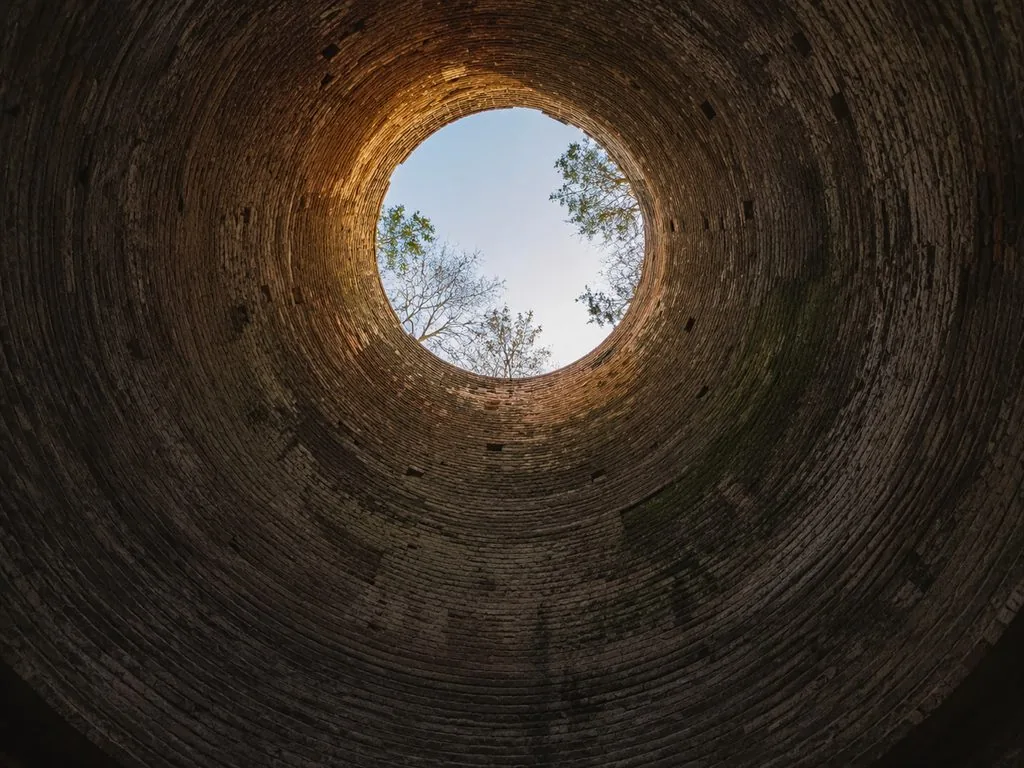
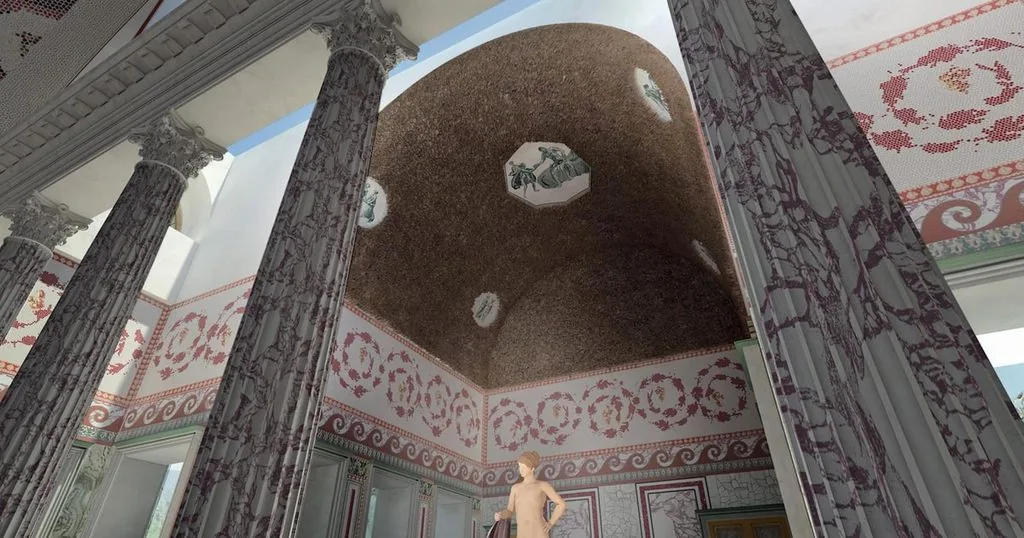
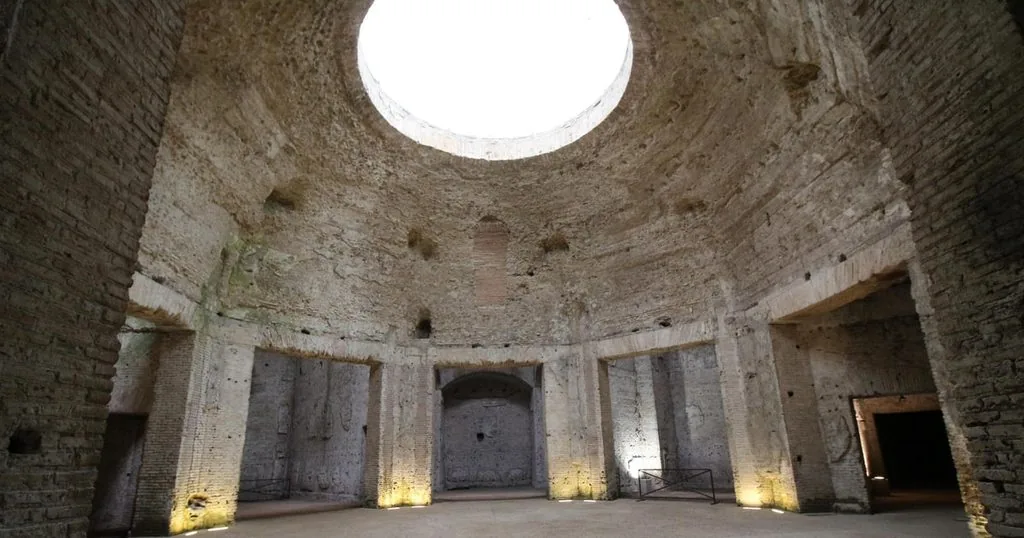
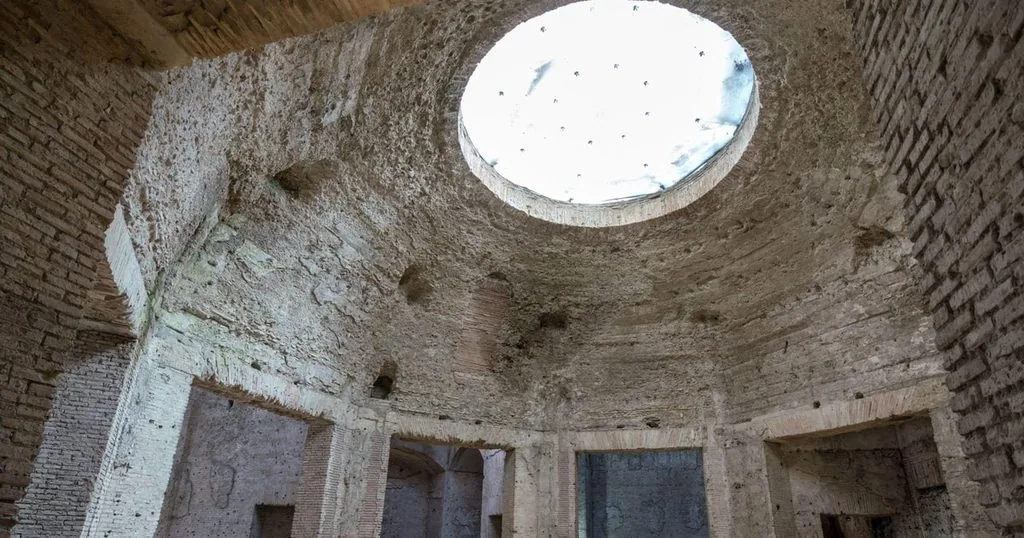
You stand in a room of bare brick and concrete, put the headset on, and the room is rebuilt around you as it was: the marble, the surfaces, the proportions that the structure alone does not give you. Video projections onto the walls do a related job at other points in the route. That is the whole of it, and the reason it works so well here specifically is that the Domus Aurea has been comprehensively stripped. The marble, gold and ivory that gave the palace its name went in antiquity. What survives is the shell — barrel-vaulted corridors, the cryptoporticus, fresco fragments on the vaults, and the octagonal room with its domed ceiling and central oculus, which is an engineering ancestor of the Pantheon’s dome.
At most Roman sites a reconstruction is a nice extra laid over something you can already read. Here it is closer to a translation. Without it, a lot of visitors would look at a corridor of brick under scaffolding and monitoring equipment and take my word for what it once was — what is actually down there.
The reviewers agree, which they do not always
Across four products and four separate review pools, the headset is the thing people name without being asked. Fernando, from Panama, wrote: “The VR experience is extremely good. This is a must if you are visiting Rome.” Zoe, from France, said she really enjoyed the tour, found it very informative and loved the VR part. Pavlo, from Germany, on a different product entirely: “The VR was amazing, I couldn’t sit on my seat and was watching around like crazy, huge kudos to the guys who made it.” Ekaterina, from Germany, wrote that even her six-year-old loved it and that the VR complements the tour excellently. Stephanie, also from Germany, called the virtual experience and the excavation site both fantastic.
I have been down half a dozen times and I would put it slightly less warmly than they do. The sequence is short, it is a fixed set of moments rather than something you explore, and if you already read Roman brickwork fluently it tells you little you had not worked out. But I have watched people who were plainly bored in the corridors come alive during it, and on a site this stripped that is worth a great deal. The longer assessment is here.
The three single-site tours, all with the headset
The cheapest one is also the best rated and the only multilingual one, which makes this an easier page than it looks.
 Best rated
Domus Aurea Guided Tour and Virtual Reality Experience
 VR included
Domus Aurea Guided Tour with VR Experience
 Most reviewed
Domus Aurea: Nero’s Golden House Guided Tour
The Domus Aurea Guided Tour with VR Experience is from $86, rated 4.5 from 233 reviews, an hour and a half, English only, and lists the guided tour, entrance ticket, all fees and VR devices. Kelly, from the United States, said the guide was thorough and educated them well; Shilo, also American, wrote that the tour was not too big and the guide both knowledgeable and passionate; Andrew called it incredibly informative and articulate, and money well spent. It is near-identical to the Golden House tour on price, score, language and inclusions, and the two share a meeting point at the corner of Via delle Terme di Tito and Via Nicola Salvi. Pick whichever has your slot. The tour, reviewed in full.
Usually included
- The VR headset sequence, on every product and on the official rate
- Video projections onto the walls at points along the route
- A guided visit of roughly 75 to 90 minutes, which is the only way in
- A hard hat, issued at the entrance and worn throughout
- Admission and all taxes and fees, on all four products
Not included
- Any extra rooms or access that the official guided visit does not cover
- A longer or more elaborate VR sequence on the more expensive tours
- Suitability for wheelchair users or significant mobility restrictions
- Entry on Monday to Thursday, or on the first Sunday of the month
- Anything in German, which no product in this catalogue offers
Wear something you can put a headset on over, and bring a layer. It is about 10°C down there year-round and damp, which in August is the most comfortable hour and a half you will spend in Rome and in January is genuinely cold. People underdress for it constantly, and a cold visitor is not paying attention to the reconstruction they paid for.
So which do you book?
Since the headset is not a differentiator, the decision is the ordinary one: cheapest, best rated, in your language, on your date. That is the flagship at $65 unless it is full. What you should not do is pay more on the assumption that a pricier listing has a better VR sequence, because there is no evidence of that and the inclusions read identically. And before any of it, check what the park is charging for the identical visit — the price comparison is the page that saves people the most money on this site.
Can’t make these dates?
Browse more available Domus Aurea tickets and find one that fits your schedule — all with instant confirmation and free cancellation.
Frequently asked questions
Is the Domus Aurea VR experience worth it?
On this site, unusually, yes — and I say that as someone who is normally cool on museum VR. The Domus Aurea was stripped of its marble, gold and ivory in antiquity, so what you walk through is structure: brick, concrete, vaults and scaffolding. The reconstruction is doing translation rather than decoration. Reviewers across all four products name it more often than they name the guides. It is short and it is fixed rather than exploratory, which is the fair criticism.
Which Domus Aurea tours include the VR headset?
All four, and the park’s own guided visit includes it as well, so it is not something a tour adds. That means a listing with “VR Experience” in its title is not offering you more than one without it. Choose on price, language and availability instead — the four compared, where the cheapest also happens to be the best rated and the only multilingual one.
Can I do the VR part without the guided tour?
No. There is no way to enter the Domus Aurea except on a booked guided visit, in a group of up to about 25, because the site is an active excavation rather than a museum. The headset sequence happens at a fixed point in the guided route, with the group. The park does list a cheaper entry-only rate that excludes both the tour and the VR, but travellers report it is often not purchasable online.
Is the VR suitable for children, or for people who dislike enclosed spaces?
One reviewer, Ekaterina from Germany, wrote that her six-year-old loved it, so children can certainly enjoy the reconstruction. The enclosed-spaces question is separate and more serious: two of the four operators explicitly exclude people with claustrophobia, and all of them exclude wheelchair users and people with significant mobility restrictions. The floors are uneven and damp — the stated exclusions, plainly.