Nero’s Golden House: the fire, the building and the burial
The dates, and only the dates
Nero became emperor in AD 54, after Claudius. The great fire of Rome burned in July AD 64. He died in AD 68. That is the whole of what I am going to tell you about the man, and it is deliberate. The internet is thick with Nero material of wildly varying reliability, most of it irrelevant to standing in his building, and a ticket page is not the place to relitigate a first-century reputation. What is worth knowing is that he started this after the fire and had four years, which is why it was never finished as intended.
The name, and why nothing golden survives
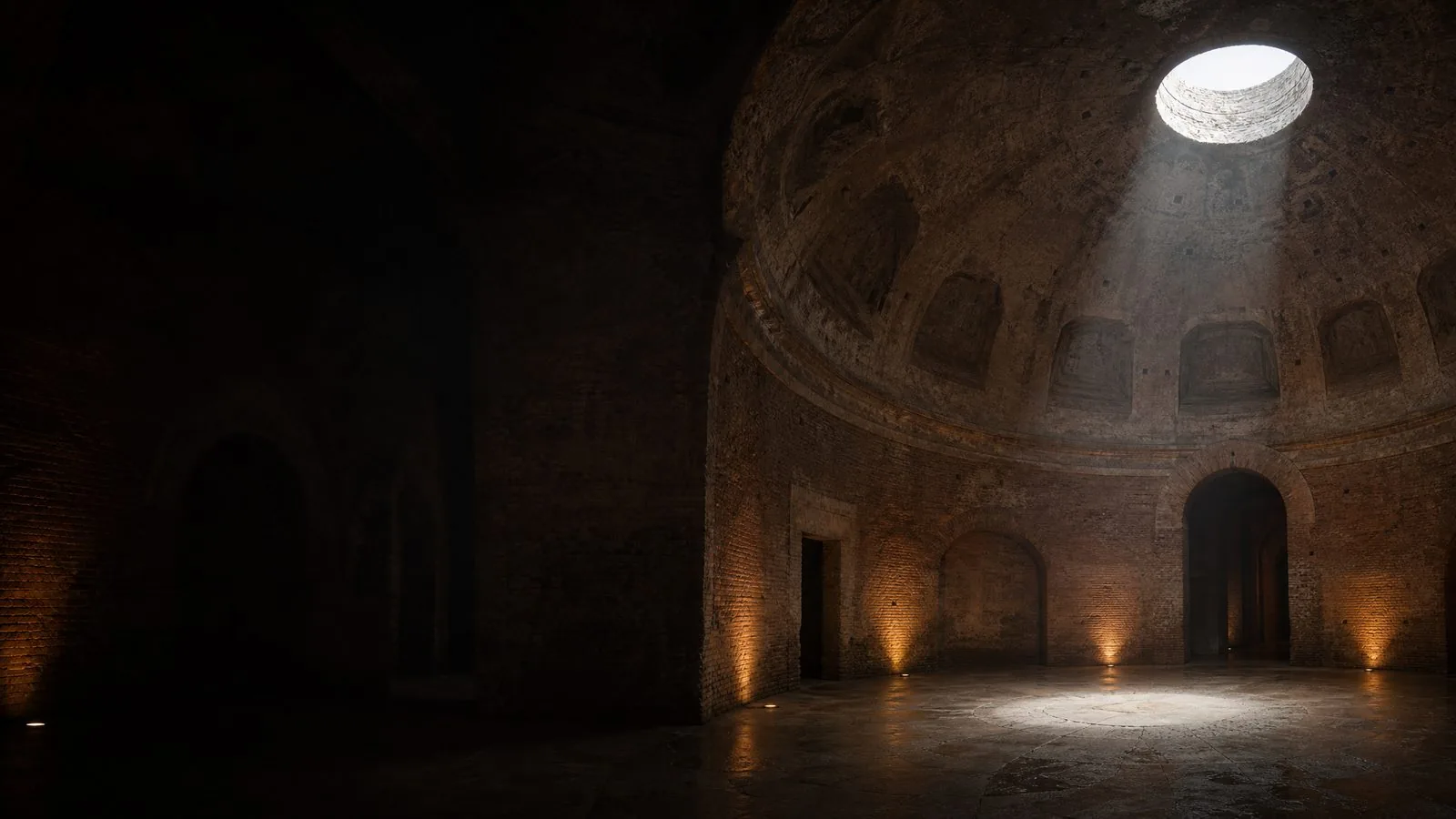
Domus Aurea means Golden House, and the name came from the marble, gold and ivory that finished it. All of that was stripped in antiquity. What you walk through today is brick and concrete: the structure, without the surfaces. That is not damage in the ordinary sense, it is removal, and it is why the VR reconstruction does so much work on a modern visit — what the headset puts back. As for how large the palace was, I am not going to give you a figure. Sources vary wildly and the original extent is disputed. It covered a large part of several of Rome’s hills, and that is as far as the evidence takes anyone honest.
How his successors erased it
Systematically, and by building. The palace grounds held a lake; it was drained, and the Colosseum was put up on that spot. Then Trajan’s baths went up directly over the palace itself. Both were acts of erasure, and the second one had a consequence nobody intended: burying a building is also how you preserve one. The rooms under the Colle Oppio survived because somebody wanted them gone — the short version.
The rediscovery, and a word in English
Around the end of the fifteenth century, people fell through holes in the hillside into spaces they took to be caves — grotte. Renaissance artists went down there with ropes and candles to copy the painted decoration on the vaults, Raphael among them, and the style they brought back was named after the caves: grottesche. That is where the English word grotesque comes from. Some of those visitors scratched their names into the plaster, and the graffiti is still there — the frescoes and the signatures.
What works
- The dates are firm: emperor from AD 54, fire in July AD 64, died AD 68
- The burial is documented in what stands on top of it, which you can see from the street
- The rediscovery has a physical trace: Renaissance graffiti in the plaster
- The word grotesque genuinely descends from these rooms
Worth knowing
- The marble, gold and ivory were stripped in antiquity and nothing of them survives
- It was never finished as intended, so it is a fragment of an unfinished thing
- No reliable figure exists for its size, and anyone giving you one precisely is guessing
- Most of what circulates about Nero personally is not verifiable and is not on this page
Read the building in reverse order on the day. You are standing in a palace that was buried by baths, next to an amphitheatre standing on its lake, looking at paintings that gave English a word. Almost nothing you are looking at was meant to survive, and it survived because somebody was trying to get rid of it.
Hearing it from a guide
The most-reviewed product in the catalogue rates 4.5 from 559 reviews, English only, and the guides are what the reviews are mostly about. One American reviewer wrote of theirs: “Our guide, Claudia, was fantastic. Just the right mix of giving information, friendly, with a little bit of humor.” The full picture, including the mixed reviews, is on the reviews hub.
Frequently asked questions
What was the Domus Aurea?
The palace Nero began in Rome after the great fire of July AD 64 and never finished as intended. Its name means Golden House, after the marble, gold and ivory that were stripped in antiquity. See what survives.
When did Nero build the Golden House?
After the great fire of Rome in July AD 64. He had been emperor since AD 54, following Claudius, and he died in AD 68, which is why the palace was never completed as planned.
How big was the Domus Aurea?
No reliable figure exists. Sources vary wildly and the original extent is disputed, so I am not going to publish a number. It covered a large part of several of Rome’s hills, and that is as far as the evidence goes.
Why can you only see part of it?
Because what survives is the ground floor buried under Trajan’s baths, and because it is a live excavation whose accessible rooms change — see why it is underground.